Research
Works in Progress
Assessing the Impact of Crop-Residue Burning on Traffic Accidents: Evidence from Punjab, Pakistan
Anticipation Effects in Vehicle Markets: Evidence from Swedish Feebate Systems
Abstract: We study anticipatory behavior in response to Sweden’s vehicle feebate policy.
Using administrative data on vehicle registrations linked to individual and firm characteristics, we document anticipation effects that are largely driven by intertemporal substitution but also lead to excess vehicle adoption.
Vehicles adopted ahead of implementation are systematically dirtier and subsequently driven more intensively, amplifying the environmental damages of the policy announcement.
Anticipatory adoption is most pronounced where anticipation is easiest or policy compliance is most challenging: in particular, dealer stock-management strategies, household and firm liquidity, and information salience all increase anticipatory purchases, while access to charging infrastructure shifts post-policy vehicle purchases towards green cars.
We quantify the environmental implications of anticipatory behavior, accounting for excess adoption, the higher emissions intensity of vehicles purchased in anticipation, and their more intensive subsequent usage.
Ultimately, the environmental costs of the anticipatory behavior amount to approximately $40 million, or around 34 percent of the budget allocated to the policy in 2019.
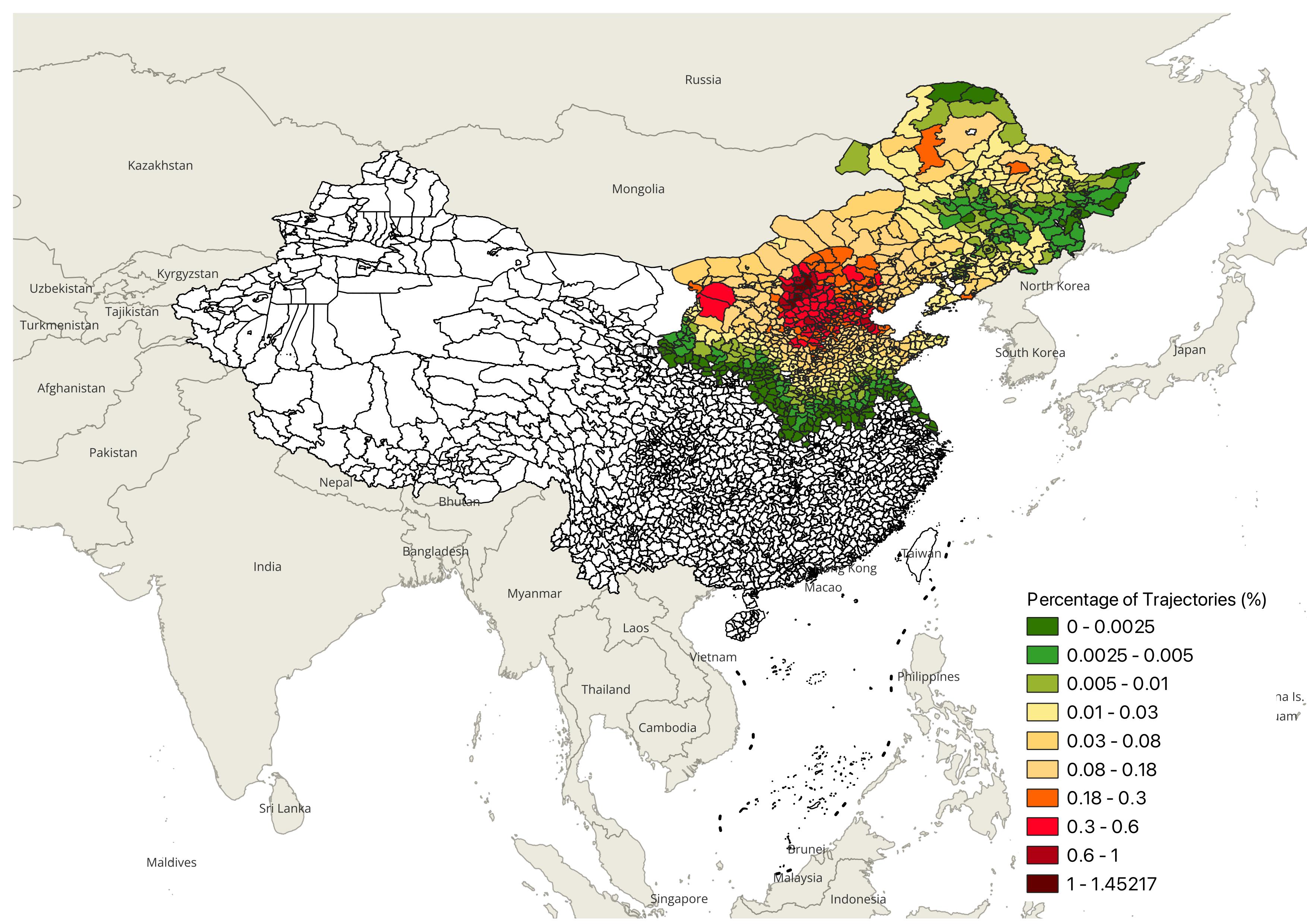
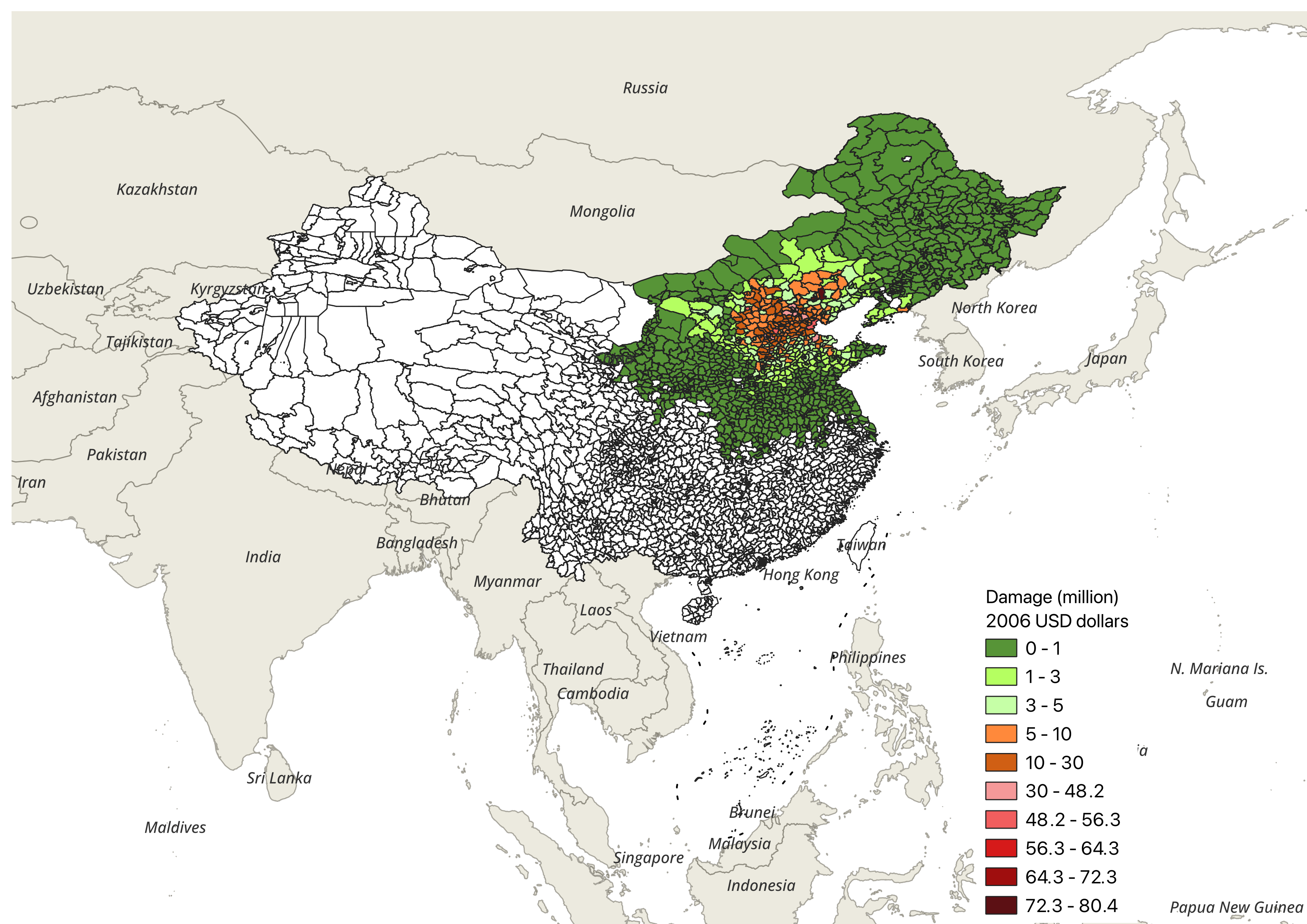
The Heterogeneous Environmental Benefits of Electric Vehicles in China
Abstract: This paper quantifies some of the distributional effects of electric vehicle (EV) adoption in China, the largest global
EV market. Electric Vehicles (EVs) are vital for decarbonizing transportation; however, their adoption increases
emissions from electricity generation in fossil fuel-dependent grids like China’s. Using satellite data, we estimate
monthly PM2.5 concentrations attributable to coal-fired power plants and apply an econometric model to calculate
marginal emission factors at the provincial-plant level. We then use an air circulation model to measure EV-related pollution
in downwind counties. We find that EV adoption in Northeast China significantly increases population exposure
to PM2.5 levels, whereas downwind impacts are smaller when EVs are charged in the Central provinces. In Beijing,
one of the cities with the greatest concentration of EVs, redistribution of PM2.5 damages from urban to downwind
counties predominantly affects populations in lower-income counties. Finally, we provide suggestive evidence that
the delayed rollout of market reforms in China’s electricity has contributed to a non-negligeable share of the cost
of pollution in the Northeast. Our results highlight the risk that in the shift to EVs disadvantaged peri-urban areas
may bear a disproportionate burden of pollution, while residents in more developed cities disproportionally benefit,
raising concerns over environmental justice
Quantifying the Real Pollution Exposures caused by Crop-Residue Burning in Indian and Pakistan Punjab